





AI meditation
Techniques that actually work, and honest reflections from real practice. What we've tried, and what we've learned.

The narrator puts you on edge and you assume it is you. Usually it is the recording, or what the script asks you to picture. How to tell which one is yours.
Read the article 




Numb isn't one state. Four kinds wear the same word, and the advice that helps one can deepen another. How to tell which flat you're in, and what actually fits.

The guided session works fine until the voice says picture a beach. If mental images were never a thing for you, here is what to do with the instruction.

ChatGPT writes a good meditation, then hands it over and steps back. How to prompt for a session you can actually practise, and where the format runs out.

People rate an AI-narrated meditation no differently from one they guide themselves. What that proves about trusting a synthetic voice, and what it does not.

Metta is five different practices sharing one set of phrases. What each circle actually trains, the technique that moves it, and what to do when one stalls.

Anthropic measured sycophancy across ten guidance domains. Spirituality hit 37.9%, health and wellness 2.9%. Here is the full table and what drives it.
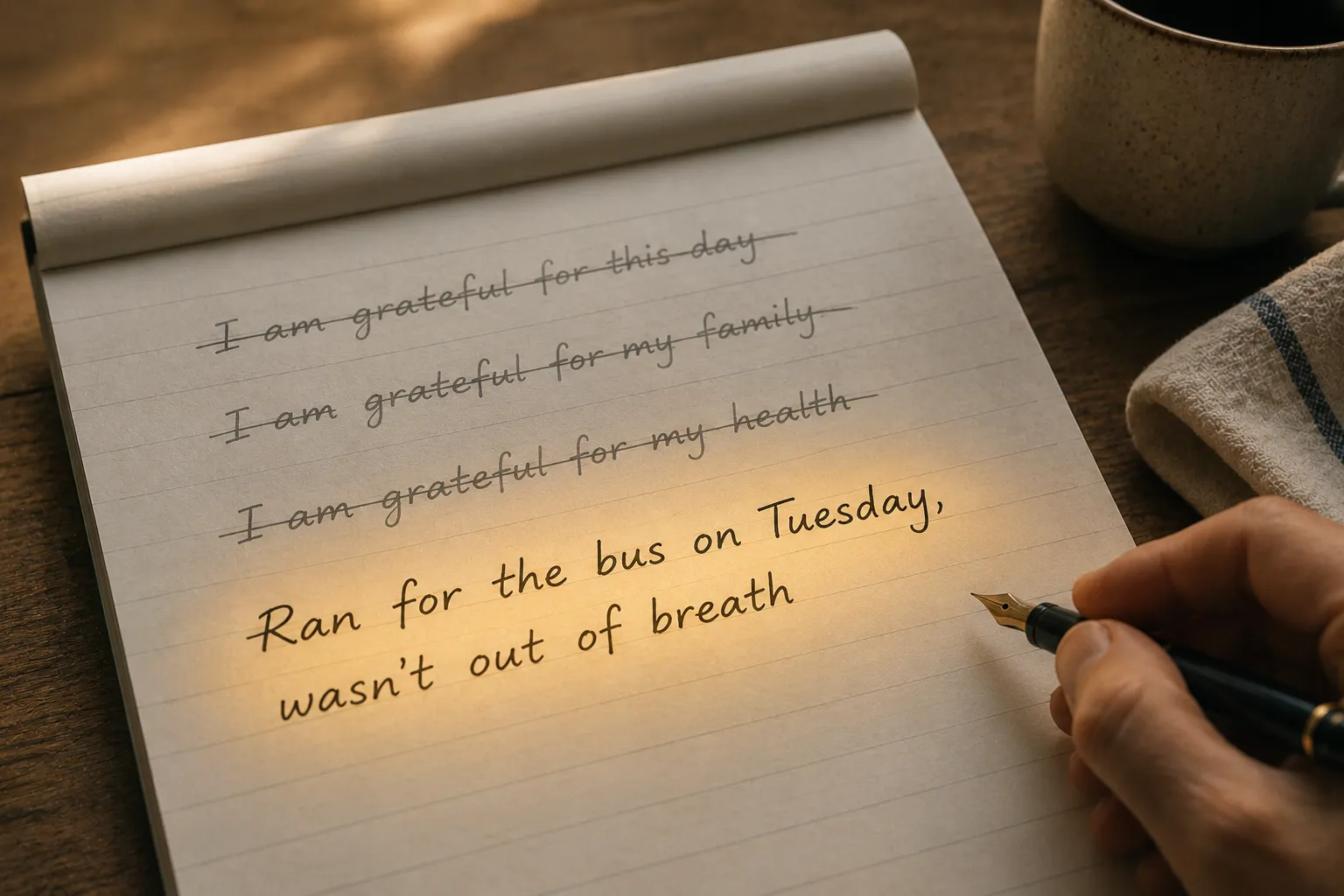
Your gratitude list collapsed into the same three things by week two. That's a category problem, not a gratitude problem. Six techniques, and the evidence.

Research on meditation session length points to frequency and follow through as much as minutes. Here is what the evidence shows, and where it stays uncertain.

Most "AI meditation" apps mean chatting with a bot. A real guided session works differently: rooted in technique, shaped by your context, narrated for you.

Cortisol isn't a toxin to detox with mocktails or supplements. It's a signal from your nervous system. Here's what genuinely lowers it, backed by research.

Yoga Nidra before bed lowers cortisol and settles your nervous system, so the day stops following you into sleep. What it is, why it works, and how to use it.

Sometimes meditation makes things harder, not easier. Here's what that feeling means, why it's often part of the path, and the kinder way through it.

Most meditation assumes quiet mornings and no one to hold. This pillar is for parents, caregivers, therapists, students, leaders, and the multi-role reader.

Some shame fades with practice. The shame you've earned may not, and that's not failure. An honest look at meditation for shame: living with what stays.
StillMind puts meditation timer, AI-guided sessions, and voice journaling in one private app — everything we write about here, put to use.
Explore: AI-guided meditation · Meditation timer · Meditation journal · Meditation guides
Join our community to get notified about new AI-guided sessions, condition-specific features, meditation insights, and special early access to everything we release.