

Open field under a soft daylight sky
Condition · ADHD

Meditation for ADHD.
Your brain isn't broken.

You don't need to sit still. You don't need to clear your mind. You need meditation built for how ADHD brains actually work.

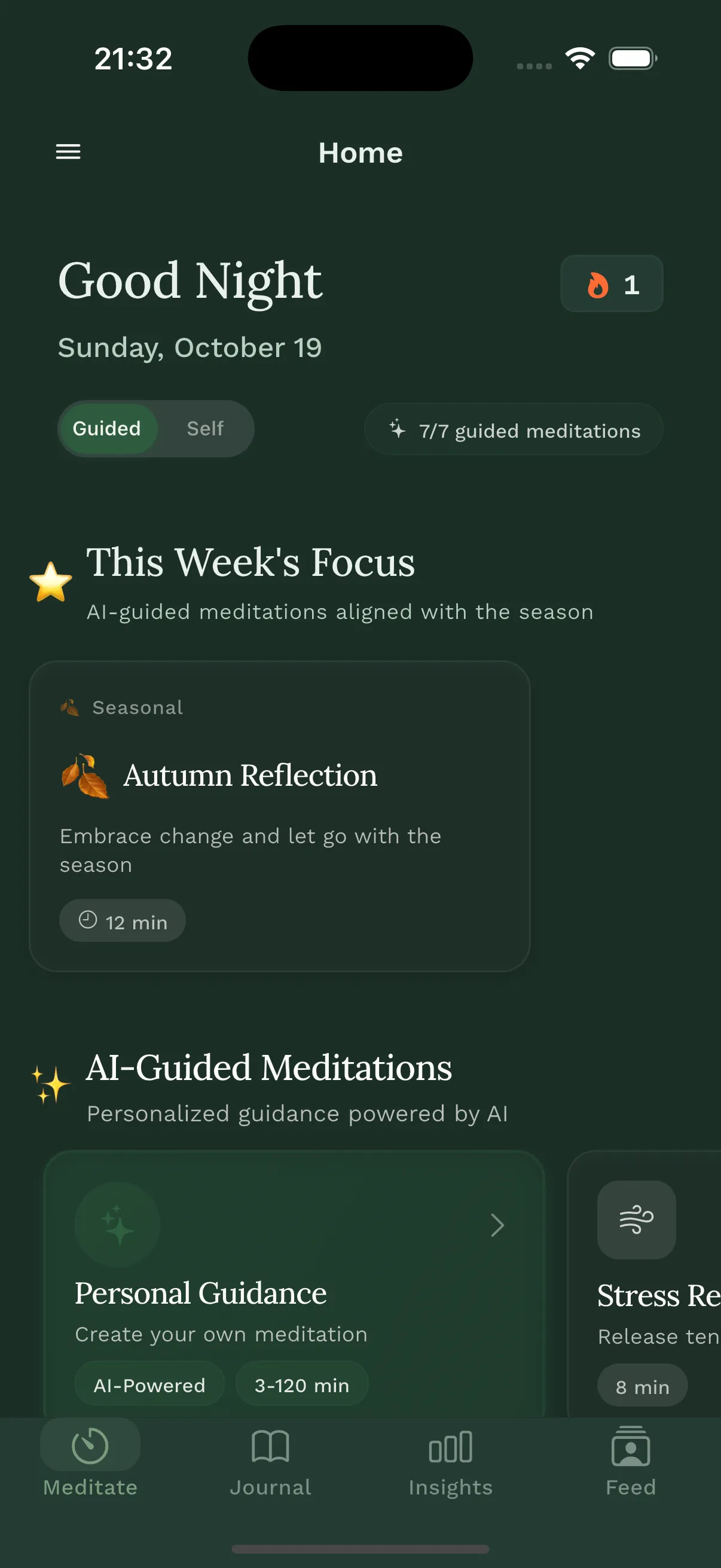
StillMind AI guided meditation for ADHD with short session options
Continue reading
The problem

Every meditation app says "clear your mind" and your brain laughs. Thoughts aren't slowing down. They're accelerating.

Sit still for 20 minutes feels impossible when you can barely sit for 2. The app tracks your streak and you forget for three days and now you feel shame on top of everything else.

Cases in practice

Six ADHD moments, six specific sessions.

01
Task paralysis

"I have 147 things to do and I can't start any of them. The overwhelm is paralyzing."

5-minute grounding to pick ONE thing. Actual techniques to break paralysis and choose a first step.

02
Hyperfocus crash

"I worked for 6 hours straight without eating. Now I'm completely fried and can't function."

Wind-down meditation for coming off the dopamine spike. Transitioning from intense focus to rest.

03
Rejection sensitive dysphoria

"One comment ruined my entire day. I know it's RSD but the emotional pain is overwhelming."

Validates RSD is real neurological pain, not overreaction. Grounding when criticism feels like devastation.

04
Time blindness panic

"Where did the day go? It's 5pm and I accomplished zero things."

Compassion for ADHD time perception. Letting go of productivity shame. Finding ground when time slips away.

05
Executive dysfunction

"I know what I need to do. I can see the steps. My brain won't execute."

Acknowledgment that executive function failure is neurological. Creating tiny wins to build momentum.

06
Sensory overload

"Everything is too much right now. Too loud, too bright, too many inputs."

Grounding for overwhelmed nervous system. Options for silence or gentle sound. Whatever your sensory needs require.

ADHD-adapted

Built for how your brain works.

01

2-minute sessions

Can't commit to 20 minutes? Start with 2. Short sessions that actually get done. Build up when ready, not before.

02

Movement-friendly

Walking meditation. Pacing while listening. Fidget-friendly sessions. Your body needs to move. Meditation that allows it.

03

AI that understands ADHD

Tell the AI about your specific ADHD challenge. It creates sessions for task paralysis, hyperfocus crashes, RSD, or whatever you are facing.

04

Compassionate tracking

Build streaks when consistent. When life happens, see your Mindful Momentum instead. Always your best stat, never shame.

How it works

ADHD meditation in three steps.

01

Tell the AI about your ADHD

"I have ADHD and I'm overwhelmed by task paralysis." The AI creates a session specifically for you.

02

Start short (2-5 minutes)

Choose a ridiculously short duration. Complete a session. Build confidence that you CAN meditate.

03

Allow movement and racing thoughts

Fidgeting is fine. Pacing is allowed. Your mind will wander constantly. That is ADHD, not failure. That IS meditation.

In practice
"First meditation app that doesn't make me feel broken for having a fast brain. 2 minutes, movement allowed, no shame. Finally."
— StillMind user with ADHD

ADHD focus mode is opt-in inside StillMind, and it's a quietly important corner of the app. In our first-party usage data, roughly 1 in 3 users who engage with the ADHD focus mode opt in. A small but committed cohort of people who need the extra accessibility support.

ADHD meditation questions

Can people with ADHD actually meditate?

Yes. But not with meditation designed for neurotypical brains. ADHD meditation needs shorter sessions (2-5 minutes), movement options, and reframing racing thoughts as normal. When adapted to ADHD neurology, meditation helps with emotional regulation, impulsivity, and focus.

Why does "clear your mind" fail for ADHD?

ADHD brains have significantly more thought activity and faster transitions. The instruction is neurologically impossible and creates shame. ADHD meditation says your mind WILL race. The practice is noticing and gently redirecting. Not stopping thoughts. Observing them.

Is 2-minute meditation still effective?

Yes. A completed 2-minute session beats an aspirational 20-minute session you avoid. Consistency matters more than duration. Start where you can succeed, not where you think you should be.

Can I meditate while moving or fidgeting?

Absolutely. Walking meditation is thousands of years old. ADHD bodies need movement. Meditate while pacing, fidgeting, or using a stress ball. The mental practice works whether sitting, walking, or moving.

What if my thoughts won't slow down?

They won't. That's ADHD. What changes is your relationship to thoughts. Instead of being swept away, you practice noticing: "oh, that's a thought." Observing thoughts instead of being them. That is the practice.

How is ADHD meditation different from focus apps?

Focus apps boost concentration for productivity. ADHD meditation builds awareness and emotional regulation. The goal is not productivity. It is understanding your patterns and building compassion for your neurological differences.

Begin

Try meditation built for ADHD brains.

Start with 2 minutes. Allow movement. No shame for racing thoughts.

— 2-minute sessions
— Movement-friendly
— Racing thoughts are normal
— Free forever