
Meditation for insomnia.
For being awake at 3am.
Not sleep stories. Not relaxation promises. Honest support for chronic insomnia, middle-of-night wake-ups, and the meta-anxiety of worrying about not sleeping.
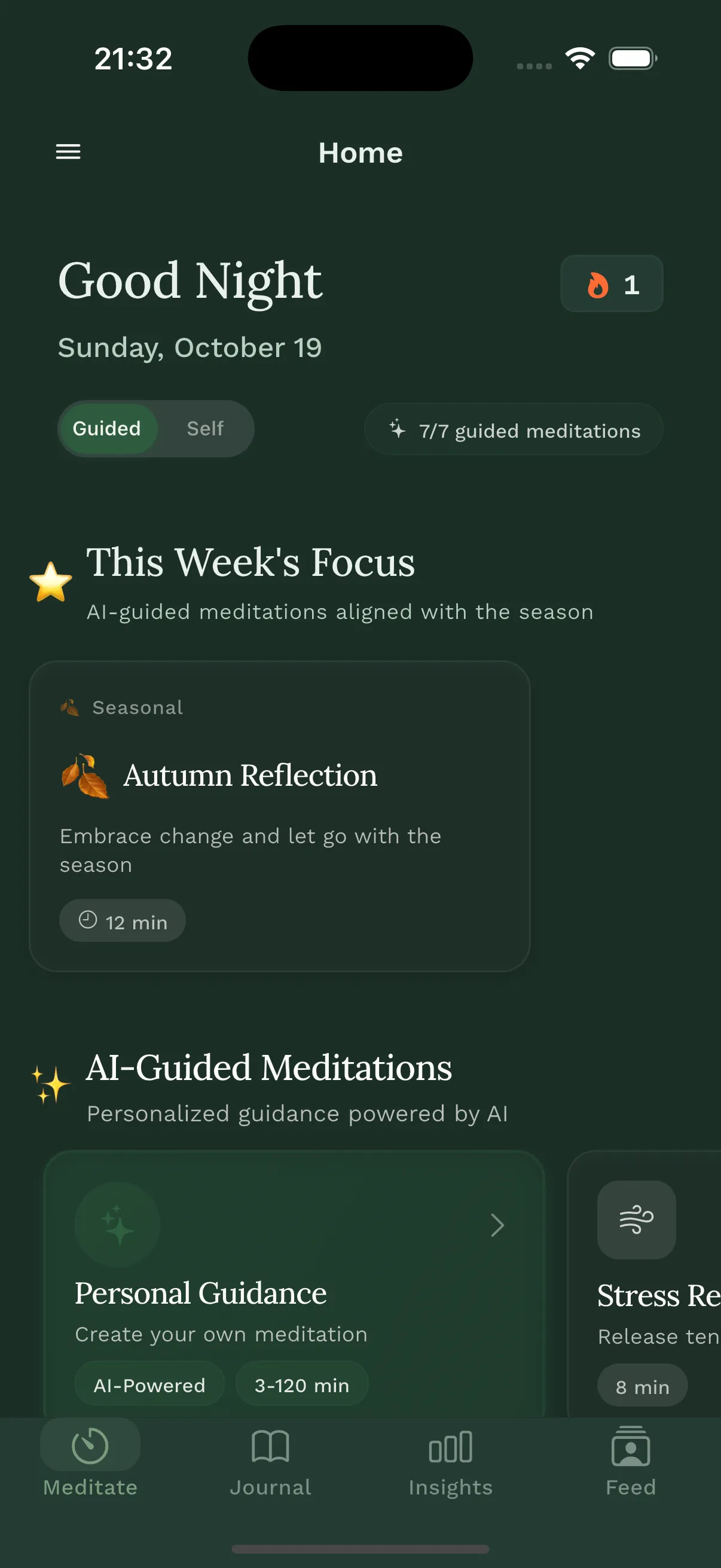
The worst part of insomnia isn't being awake. It's the anxiety about being awake.
Can't sleep. Worry about being tired tomorrow. Get more anxious. Even more awake. Check the clock. Calculate remaining hours. Panic about lost sleep. Check the clock again.
Four insomnia types, four different approaches.
"Lying in bed for 90 minutes. Mind replaying conversations. Getting more awake."
Short sessions to interrupt thought loops. Permission to be awake without panic.
"Wide awake at 2:47am. Work presentation tomorrow. Calculating hours of sleep left."
Meditation for being awake right now. Reducing clock-watching anxiety. Lowering panic so rest is possible.
"Awake at 4:23am. Sleep feels done. Too tired to get up, too awake to sleep."
Sessions for the rumination hour. Accepting sleep might be over. Reducing distress of early waking.
"Can't sleep Sunday night. Dreading Monday. Watching the sleep window close."
Anticipatory anxiety sessions. Acknowledging work dread is valid. See <a href="/meditation-for/burnout/">burnout meditation</a> for ongoing work stress.
How StillMind works with insomnia.
For being awake, not forcing sleep
Sessions reduce the panic of being awake. No guarantees you will fall asleep. That is honest.
2 to 15 minute sessions
Short when you are frustrated and sleep-deprived. Longer if you want them. You are in control.
Meta-anxiety support
Acknowledges worrying about not sleeping. Addresses the anxiety about tomorrow is exhaustion.
Pattern tracking for your doctor
Use <a href="/voice-journal/">voice notes</a> to track sleep patterns, triggers, and what helps. Build data for your sleep specialist.
Insomnia meditation in three steps.
Describe your night
Tell the AI what you are experiencing. "Awake since 2:47am. Work presentation tomorrow. Getting more anxious."
Choose your duration
2-5 minutes for intense anxiety. 10-15 if you can sustain focus. Short often works better than long.
Practice without expectations
The goal is not "meditate and fall asleep." It is reducing the panic of being awake. Both outcomes are okay.
"Every other sleep app promises I'll drift off. This one just says: you're awake, that's okay, let's make 3am less awful. That honesty is why it actually helps."— StillMind user
Insomnia meditation questions
Can meditation help chronic insomnia?
Traditional "clear your mind" meditation at 3am can make insomnia worse. StillMind focuses on working with being awake, not forcing sleep. The goal is surviving 3am with less distress, not toxic positivity about relaxation.
What are the different types of insomnia?
Sleep onset (can't fall asleep), sleep maintenance (2am/3am wake-ups), early morning (4am/5am waking), and mixed. Each needs different meditation approaches. StillMind adapts to what you are experiencing. If you want a starting point, you can find your meditation type in about two minutes.
Sleep meditations make me angry. How is this different?
No promises you will "drift off." No sleep hygiene lectures. No pretending relaxation equals sleep. Just honest acknowledgment that 3am is hard and worrying about not sleeping makes it worse.
Should I meditate when I can't sleep or before bed?
Both, with different goals. Pre-bed targets anticipatory anxiety. Middle-of-night reduces panic. Some people find short sessions (2-5 minutes) work better when sleep-deprived.
Will meditation cure my insomnia?
No. Some insomnia requires medical intervention (CBT-I, medication, hormone therapy). Meditation is a complement. If you have chronic insomnia (3+ nights per week for 3+ months), talk to a sleep specialist.
Can meditation make insomnia worse or leave me more alert?
Occasionally, yes, and it helps to know that ahead of time. Sharp, focus-heavy techniques can feel activating, and lying awake "trying" to meditate can add pressure that keeps you alert. The fix is to choose gentle, body-based wind-down practices rather than concentration exercises, and to let go of any goal of falling asleep. If insomnia is persistent, it is worth speaking to a doctor too. StillMind's sleep practices are designed to soothe rather than sharpen attention.
Is it ok to meditate in bed if I have insomnia?
Yes, for a bedtime wind-down practice, meditating in bed is fine and often helpful. The one thing to watch is the pressure to perform. If you find yourself lying there anxious about whether it is "working," ease off and simply follow the guidance without expecting a result. Let rest come as a byproduct, not a target. StillMind's sleep sessions are made for exactly this, guiding you gently in bed without turning sleep into another task.
How do I get back to sleep when I wake at 3am and can't drift off?
First, resist checking the clock or your phone, which pulls you into alertness. Keep the lights low, stay lying down, and give your mind one gentle anchor, like the slow rhythm of your breath or a soft guiding voice, instead of chasing sleep. If your thoughts start racing, let them pass without following them. StillMind offers short practices made for the middle of the night, designed to ease you back toward rest without fully waking you up.
Try meditation for insomnia.
Free forever. No sleep hygiene lectures. Honest support for being awake at 3am.