Meditation for night shift: sleeping when your body won't
Blackout curtains up, still wide awake at 9am. The standard wind-down routine is day-shift advice, and it can cost you the only window you have to sleep.
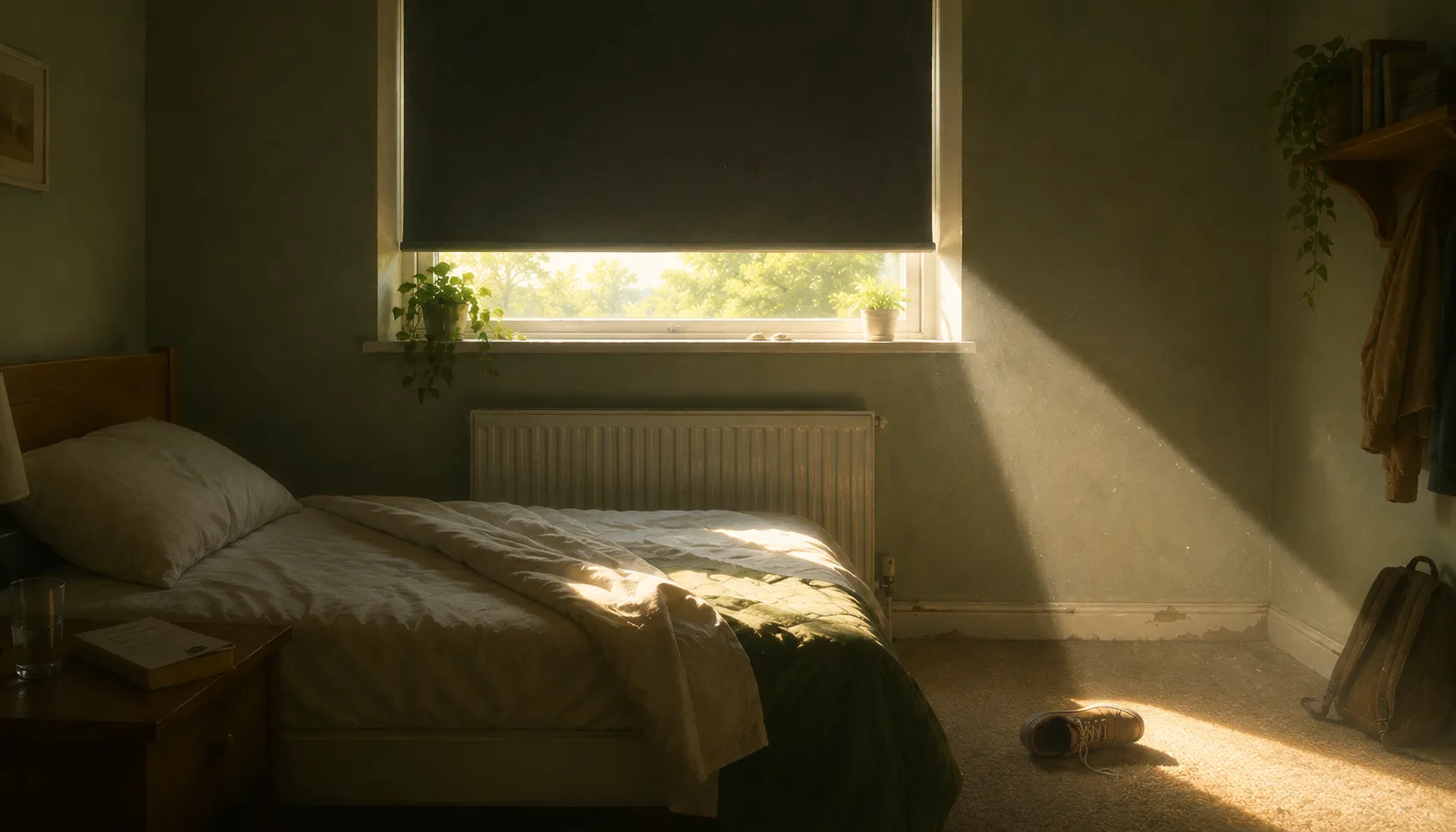
The curtains are blackout. There are earplugs in, a fan going for the white noise, and you have not touched caffeine since one in the morning.
It is quarter past nine and you are completely awake.
That is the part that stings. You did the list. You bought the film for the windows and the mask for your eyes. You told the household to keep it down. And here you are, listening to a delivery van and somebody’s furniture being dragged across a floor upstairs, doing everything right and getting nothing for it.
Here is the thing. Every item on that list is real night-shift advice and you have already taken it. It is the next instruction, the one about how to spend the hour before you get into bed, that was written for people who sleep at night.
This sits alongside what actually helps you sleep and our sleep practice library, with non-sleep deep rest as the companion for the hours you cannot get back.
The advice is not wrong. it is addressed to someone else.
The sleep guides converge on the same closing ritual. Dim the lights an hour out. Warm bath or shower. A book, not a screen. Something calming, maybe a short practice, then bed. It is good advice, for the person it was written about: someone whose body already agrees that the sun going down means sleep is coming.
The occupational health authority for this exact audience tells night workers something different. NIOSH runs a training programme for nurses on shift work and long hours. In the module on coping with nights, its sleep instruction opens like this:
Go directly to bed when you arrive home.
And then explains why:
If your circadian rhythms have not adjusted to sleeping during the daytime, there is only a small window of time before your natural circadian alerting mechanism will kick in and try to keep you awake.
Read the first two words again. If. That conditional is the most useful sentence written about shift work sleep, and every consumer page we read dropped it while repeating the rest of the advice.
NIOSH does recommend the bath and the relaxation techniques. It recommends them on the page about the evening shift, where the reasoning is stated plainly: there is no buffer between finishing at eleven and going to bed at midnight, so you have to build one. The night-shift page carries no such advice of its own. It is not silent, though, and it is worth being precise about that: it points you to another module for preparing yourself for sleep, and that module opens by telling you to follow a relaxing routine before bedtime.
So the programme holds both answers. What it never does is say which one wins on the morning you get home at eight, and its own bath instruction shows why that matters. A thirty minute soak within two hours of bedtime, but not right before it, cannot be fitted into going directly to bed inside a closing window. The consumer advice picks the evening shift answer and hands it to everyone.
Almost everything written on this is meditation for nurses, because NIOSH wrote its shift-work training for nurses. The evidence underneath it is the general shift-work literature, and none of the mechanism is nurse-shaped. Drivers, bakers, security staff, air traffic controllers, the parent of a four month old: same body, same window.
Two right answers, and one of them is yours
Ask a room of night workers how they decompress after a shift and you get a genuine split, with both sides certain.
One camp does not decompress at all. Home, shower, bed, asleep inside five minutes. Some of them are so far gone by the end of the shift that staying awake for the drive is the hard part. Ask them how they wind down and the answer is a shrug: they do not.
The other camp argues the opposite case, and argues it well. You would never crawl straight into bed after a day shift, so why would you after a night one? Give yourself two hours. One person I read describes a full simulated sunset: home at seven, dinner (their word, at seven in the morning), dog, errands, shower, shades down at ten, blackout curtains at eleven, asleep by noon. Five hours of the morning spent on purpose. It works for them.
Both are right, because they are answering under different conditions, and the condition is the one NIOSH names.
| Your body has not adjusted | Your body has adjusted | |
|---|---|---|
| Who this is | New to nights, rotating shifts, anyone who flips back to days off | Settled permanent nights, same sleep block every day including days off |
| Sleep pressure at the door | Enormous. Staying awake for the drive is the problem | Normal. You feel like someone at the end of a working day |
| Is there a closing window? | Yes, and it is short | No. Daytime sleep is just your night |
| What a long routine costs you | The front of the window, which is the part you were most likely to fall asleep in | Nothing. It works the way it works for anyone |
| Where the practice goes | Into the bed, and short | Wherever you like, including the usual pre-bed slot |
Most people reading this are in the left column, and not because they did anything wrong. Rotating shifts make adjustment hard by design, which is why NIOSH puts them outside this training altogether and tells anyone struggling on them to see a sleep specialist. Having a life on your days off works against it too. The compromise NIOSH suggests is worth knowing. Rather than flipping fully on days off, stay up until three or four in the morning and sleep until around midday, so that the same block, eight until noon in NIOSH’s example, is sleep on working days and rest days alike. Your body gets one fixed point to hold.
Here is the same thing drawn, because the shape is the whole argument.
The routine is the same length in both rows. Only its surroundings changed.
What is actually keeping you awake
“I cannot switch off” covers three different states, and they do not respond to the same thing. Sorting yours is worth more than any technique.
One person working high-risk labour and delivery nights described their version precisely. Two emergency caesareans, both with haemorrhages, a third arriving at handover that they jumped into, charting until half eight, home by nine and still going. Their own read on it: not anxiety, not going over it repeatedly, just still running on adrenaline. That distinction is exactly right, and it selects a different response.
| What it is | How it feels from inside | What it responds to |
|---|---|---|
| Arousal left over from the shift | Physically buzzing, heart still up, a burst of energy at the door that makes no sense given how tired you are | Something that lowers the body first. Long exhales, a warm shower, slow breathing that lengthens the out breath. Ten minutes, not an hour |
| Replay | Going back over the shift, the near miss, the thing you should have said or charted differently | An anchor for the attention that is more interesting than the replay but too dull to think about. This is the one guided practice is best at |
| Circadian alerting | Body feels calm, mind feels calm, sleep simply does not arrive, and it gets worse as the morning goes on | Light control and timing, not relaxation. This is the one you cannot meditate your way out of, and pretending otherwise wastes the window |
Most bad mornings are a mix. The useful move is spotting which one is loudest, because if it is the third, the honest answer is that a practice will not fix it and the sunglasses and the timing will.
The drive home is not practice time
Two things about the commute, and the first one is not negotiable.
If you are very sleepy, do not drive. NIOSH is blunt about this and lists the alternatives without embarrassment: get a lift, take a taxi or public transport, arrange a car pool, find somewhere near the workplace to sleep first, or take caffeine and nap briefly before setting off. Some hospitals will pay for the taxi. Nothing on this page, and no practice in any app, makes you safe to drive when you are not. Meditation lowers arousal, which is the opposite of what a drowsy driver needs.
The second thing is light, and it arrives with a condition that matters more than the tip does. NIOSH says to put on blue-blocking wraparound sunglasses before you leave the building or pass any window, including an atrium one, and keep them on until you are in the dark at home. Blue light is the specific signal that starts your circadian day, so the walk to the car is not a neutral part of the morning.
Then NIOSH adds the part the tip usually loses. Researchers warn that when you are very sleepy, those same glasses block the alerting effect of light and can make drowsy driving worse, which it calls dangerous.
The safest approach is to use sunglasses after night shift only if you have someone else to drive you home.
So the glasses belong in the passenger seat, on the bus, and on the walk from the car to your front door. If you are driving yourself and you are already fighting to stay awake, the light you would be blocking is the light keeping you awake.
What people do reach for on the drive is worth respecting, because they have landed on something real. Comedy albums, so the mind has something to hold that stops the shift replaying but is too light to start a train of thought. That is half of the job an anchor does in a practice, arrived at independently and without the vocabulary. The half it does is interrupting the replay. The half it deliberately leaves out is settling the body, which is the part that has no business in a moving car.
Where the practice actually goes
Most of what gets published as meditation for night shift is a list of techniques. The technique is not really the variable here. Placement is.
- At the end of the shift, if the buzzing is physical. Before the drive, in the car park or the locker room, five or ten minutes of slow breathing with a long exhale. This is the one that is genuinely about calming down, and it is the one to skip if you are too sleepy to drive, because your problem then is the opposite one.
- In the bed, not before it, if you have not adjusted. This is the change most people need. The practice does not get added to the front of your morning, it goes in after the lights are off, and it is short. Three to ten minutes. If it works you were going to be asleep in that window anyway, and if it does not you have lost nothing, which is not true of the version that happens on the sofa.
- In the usual slot, if you have adjusted. A settled permanent night worker with a fixed sleep block has an evening, it just happens at ten in the morning. The ordinary advice applies, including the bath.
The trap sits between the first and second of those. Gaming, a series, scrolling: everyone knows the feeling of sitting down for twenty minutes to come down from the shift and standing up at three in the afternoon. That is not weak willpower. It is that decompression has no natural end, so it expands to fill whatever is in front of it, and what is in front of it is the window.
A practice with a length you chose before you started has an end. That is most of what it is doing for you.
Built for ten past eight in the morning
Nothing in StillMind assumes a bedtime. Say you have just come off nights, that you are wired, and that you have got about four minutes. That is the practice you get.
Try StillMind, freeWhy the boring narrator works
Shift workers keep independently inventing the same tool, and it is worth naming what they have found.
- A narrated show nobody could care about. How It’s Made, old forensic reruns. Chosen precisely because there is nothing to watch and the voice is easy, on a sleep timer so it turns itself off.
- A re-read you have gone off. A chapter, then try to sleep, then another chapter if it did not take. Bonus points, one nurse said, if it is a book you abandoned because it bored you.
- The comedy album on the drive. Engaging enough to interrupt, too light to provoke.
- Sitting on the floor brushing the pets until you are calm enough to shower and eat.
Three of the four do the same job. They give attention something undemanding to rest on so that it stops reliving the shift, without being interesting enough to wake you up further. The comedy album is the odd one out, and the difference is the one that matters here: it interrupts the replay without settling anything, which is exactly why it is the one that belongs on the drive and the other three do not. One person named the mechanism exactly: it stops you going back over every minute of the night.
That is what a guided practice is, with the timer and the ending built in. Nobody who found the How It’s Made trick needs to be told meditation might help. They already worked out the principle. What the practice adds is that it stops on time and does not require you to keep choosing episodes.
The one in the afternoon wake-up
Night workers describe this constantly: awake again after four or five hours, an hour or two of drifting about, then back down for a second block. Treating that as a normal shape rather than a failed night is more useful than fighting it.
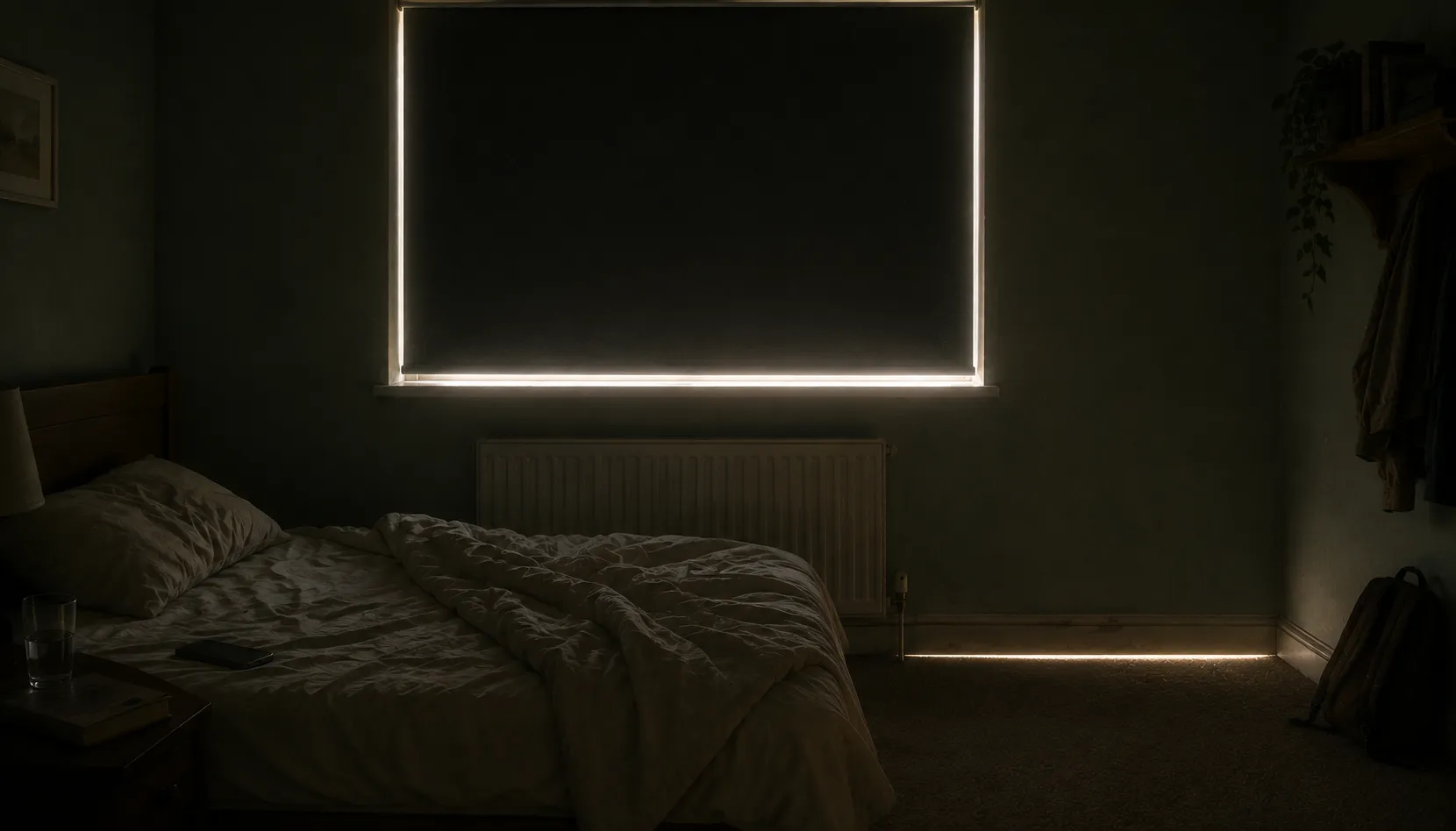 One in the afternoon. The room is doing its job and the light is still finding every edge of it.
The thing not to do is start solving it. Lying there calculating how many hours you have left before the next shift is the fastest route to being properly awake. So is getting up to be productive: NIOSH is blunt about the morning version of this, telling night nurses not to spend that time on chores or errands, because it is prime sleep time.
The more useful frame is that you are not trying to get back to sleep, you are trying to keep resting. That distinction is the whole of non-sleep deep rest, which asks for stillness and attention rather than unconsciousness, and stops caring whether you drop off. Sometimes you go back to sleep. When you do not, an hour of that is worth considerably more than an hour of arithmetic about your rota. There is a guided version of it in yoga nidra for sleep, written for the 3am shape of this hour, which is the same hour with a different number on the clock.
When to stop managing this yourself
There is a point where this stops being a routine problem.
One nurse wrote about a medication that worked the first time and then stopped. A fully blacked out room, a white noise machine, an increased dose, and still eight hours lying awake. Thirty six hours without sleep, then in to work groggy and, in their own word, unsafe. That is not something to optimise your way out of with a better practice.
Shift work sleep disorder is a real diagnosis with real treatment, and persistent daytime sleep failure with impairment at work is the reason to see someone rather than to try another supplement. Nothing here is a substitute for that, and a practice sits alongside treatment rather than instead of it.
This is also not entirely yours to solve. The National Academies’ 2019 report on clinician burnout argues for a systemic approach focused on the structure, organization and culture of health care, and it places practices like this one precisely:
Individually focused interventions, such as group discussions and mindfulness education, can be complementary to system interventions.
Complementary is the right word, and it is worth taking seriously in both directions. A quick backward rotation, no protected sleep, three twelves stacked against a family’s timetable: those produce sleep problems in perfectly healthy people, and no practice makes a bad rota survivable. What a practice can do is make the recovery you do get go further. If this has already gone past sleep and into feeling hollowed out, meditation for burnout is the closer starting point.
Common questions
Should I meditate before bed or in bed after a night shift?
In bed, if your body has not adjusted to sleeping in the daytime. NIOSH tells night workers to go directly to bed on arriving home, because there is only a small window before the natural circadian alerting mechanism starts trying to keep you awake, and a long routine before bed spends the front of that window. Keep the practice short and do it after the lights are off. If you are on settled permanent nights with the same sleep block every day, you have adjusted, there is no closing window, and the usual before-bed routine works fine.
Why can’t I sleep after a night shift even with blackout curtains?
Because darkness only solves one of the three things keeping you up. Leftover arousal from the shift, replaying the shift, and circadian alerting are different states with different answers. If your body is buzzing, slow breathing with a long exhale helps. If you are going back over the night, you need an anchor for your attention. If you feel calm and sleep simply is not coming, that is circadian, and the fix is light control and timing rather than relaxation.
Is it safe to meditate on the drive home from a night shift?
No. Never practise while driving, and if you are very sleepy, do not drive at all. NIOSH’s alternatives are a lift from a colleague or family member, a taxi or public transport, a car pool, sleeping somewhere near work first, or taking caffeine followed by a short nap before setting off. Practice lowers arousal, which is the opposite of what a drowsy driver needs.
How long should a night shift meditation be?
Short. Three to ten minutes if you are practising in bed, because the constraint is the window rather than the technique. Anything longer sits in the part of the morning you were most likely to fall asleep in. A ten minute practice at the end of the shift is reasonable if the problem is physical buzzing and you are not too sleepy to drive.
What should I do if I wake up after four hours and can’t get back to sleep?
Stop trying to get back to sleep and aim for rest instead. Night workers describe waking after four or five hours constantly, and treating two blocks as a normal shape rather than a failed night is more useful than fighting it. Lying there working out how many hours you have left before your next shift is what makes you fully awake, and so is getting up to do something useful. A non-sleep deep rest practice asks for stillness rather than unconsciousness and does not require you to drop off, which removes the pressure that was keeping you up.
Does meditation fix shift work sleep disorder?
No. Shift work sleep disorder is a diagnosis with real treatment, and ongoing daytime sleep failure with impairment at work is a reason to see a clinician. A practice can help you get more out of the sleep you are able to get, and it works alongside treatment rather than in place of it. Rota design matters more than either, and the National Academies’ report on clinician burnout argues for a systemic approach, naming mindfulness education as complementary to system interventions.