This article is part of our Complete Guide to Nervous System Regulation. Looking for hybrid movement practices? See our Meditation + Movement Guide.
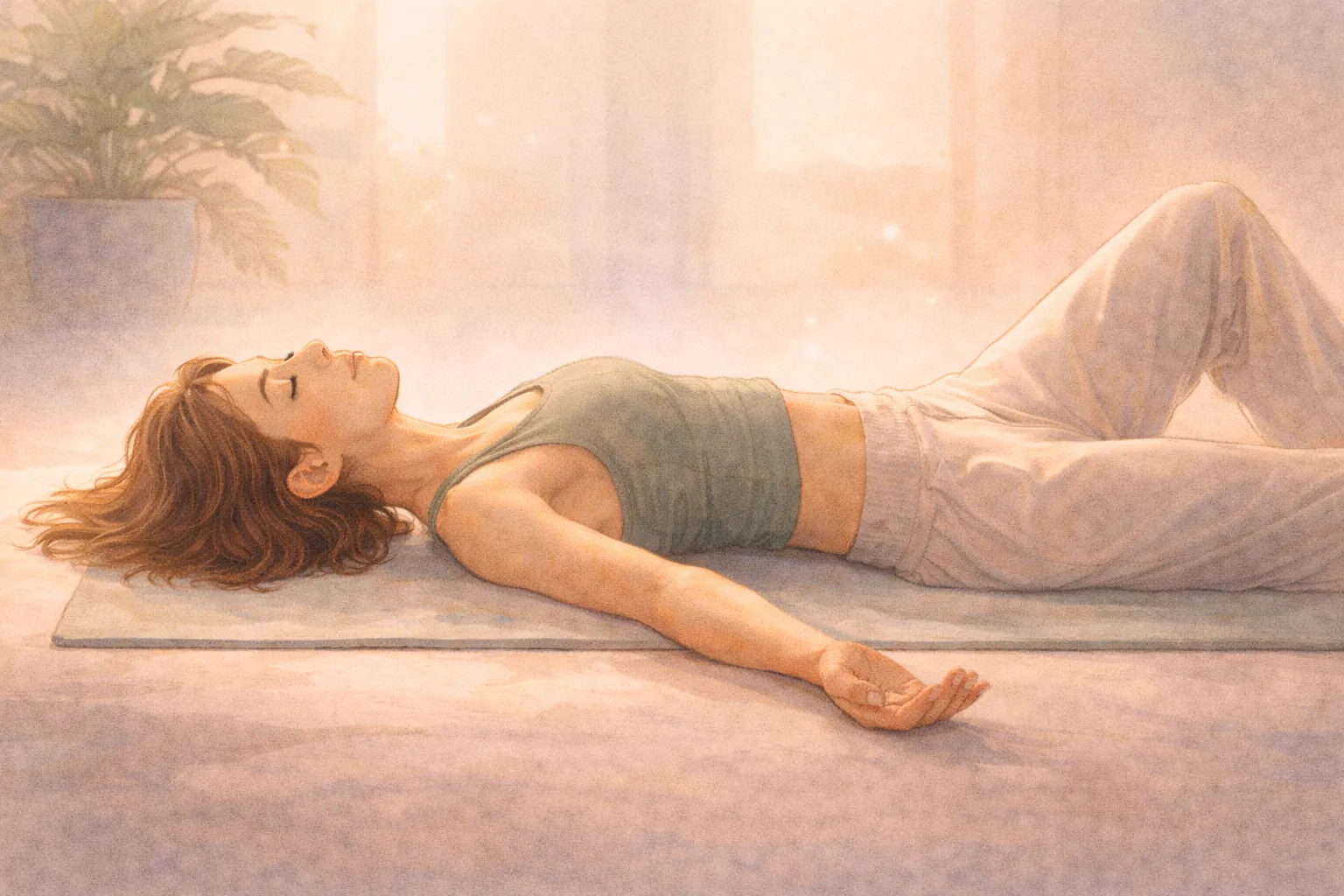
Yoga teachers have been saying it for centuries: don’t skip savasana.
That final resting pose at the end of class—the one where you lie still while everyone else is rolling up their mats—isn’t just a nice cooldown. According to the largest wellbeing study ever conducted, it might be the most important part of your practice.
And it’s not just yoga. New research shows that combining any physical exercise with mindfulness creates stronger mental health benefits than either practice alone.
The science is finally catching up to what practitioners have intuitively known: movement and stillness aren’t opposites. They’re partners.
Key Takeaways:
- The largest wellbeing study ever (183 trials, ~23,000 participants) found exercise + meditation works better than either alone
- Post-exercise is the optimal window: your nervous system is already primed for deep rest
- A 5-minute post-workout meditation routine is enough to capture these benefits
- Savasana has encoded this wisdom for 600 years—modern science confirms the yogis were right
The Swansea Study: What 183 Trials Tell Us
In January 2026, researchers at Swansea University published the most comprehensive analysis of wellbeing interventions ever conducted. Dr. Lowri Wilkie and her team analysed 183 randomized controlled trials involving nearly 23,000 participants.
Their goal: figure out what actually works for improving mental wellbeing.
The headline finding? There’s no single “best” intervention. Physical exercise, mindfulness meditation, cognitive behavioral approaches, and social connection all produced measurable benefits. But one pattern stood out.
Combined practices—exercise paired with mindfulness—produced the strongest effects.
The researchers specifically highlighted what they called “awe walks”—walking combined with mindfulness or gratitude exercises. These hybrid practices outperformed either component on its own.
As Dr. Wilkie put it: “There is no single route to improving wellbeing.” But if you had to pick a route with the highest yield, you’d choose one that involves both your body and your attention.
This isn’t entirely surprising to anyone who’s experienced the particular quality of awareness that comes after physical exertion. But now we have the data to explain why.
Why Combined Practice Works Better
Here’s what’s happening in your brain and nervous system when you exercise:
Physical activity releases BDNF (brain-derived neurotrophic factor)—sometimes called “fertilizer for your brain.” BDNF supports neuroplasticity, helping your brain form new connections and adapt to new patterns. It’s one reason exercise is so effective for depression and anxiety.
Movement triggers endorphins and dopamine—the neurochemicals associated with pleasure, reward, and reduced pain perception. This is the “runner’s high” effect, though it happens with any sustained physical effort.
Your sympathetic nervous system activates during exercise—the fight-or-flight system that increases heart rate, blood flow, and energy availability. This is the “work” part of working out.
But here’s what makes post-exercise the perfect time for mindfulness:
After physical effort, your body naturally shifts toward parasympathetic dominance—the rest-and-digest state. Your heart rate is already slowing. Your breathing is naturally deepening. Your muscles are releasing tension.
Your nervous system is primed for deep rest.
When you add mindfulness to this natural recovery window, you’re not fighting your body. You’re amplifying what it’s already trying to do.
Think of it this way: meditation during rest is swimming with the current. Meditation when you’re wound up is swimming against it. Both work, but one is a lot easier.
The Swansea research suggests this isn’t just about ease—the combination actually produces additive benefits. You get the neurochemical and cardiovascular benefits of exercise plus the attention and stress-reduction benefits of mindfulness. Not one or the other. Both.
For more on how your parasympathetic nervous system works, see our guide to nervous system regulation.
Savasana: 600 Years Ahead of the Research
Long before controlled trials and brain imaging, yoga practitioners knew something important about the relationship between movement and stillness.
The Hatha Yoga Pradipika, a 15th-century Sanskrit text considered foundational to modern yoga, describes savasana this way:
“Lying flat on the ground like a corpse is called Śavāsana. It removes tiredness and promotes calmness of the mind.”
Savasana (śavāsana) comes from the Sanskrit words śava (corpse) and āsana (posture). The name isn’t morbid—it’s descriptive. In savasana, you release all muscular effort and lie completely still, as if the body itself has become empty.
For 600 years, yogis have placed this pose at the end of physical practice for a reason: it’s where integration happens. The movements, stretches, and exertion find their completion in stillness. Without it, the practice is incomplete.
Modern research confirms what the texts describe:
- Savasana significantly lowers blood pressure and heart rate—effects that persist for 35+ minutes after practice
- It activates the parasympathetic nervous system (the same rest-and-digest state the Swansea study found so beneficial when combined with exercise)
- 30 minutes of Yoga Nidra (a deeper form of guided savasana) produces restorative effects comparable to 2 hours of sleep
The ancient yogis didn’t have fMRI machines or cortisol assays. But they had centuries of careful observation. And they noticed that movement alone wasn’t enough—you needed the stillness afterward to receive the full benefit.
Modern practitioners often skip savasana. Class runs long, there’s somewhere to be, lying still feels unproductive. But if the 15th-century masters and 21st-century researchers agree on anything, it’s this: the stillness isn’t optional.
What Athletes Already Know
Elite athletes have used meditation and visualization for decades. What used to be considered “soft” training is now standard protocol.
When George Mumford began working with Michael Jordan and the Chicago Bulls in the 1990s, sports meditation was fringe. Now it’s mainstream. Olympic training centers include mental performance coaches. NFL teams hire mindfulness consultants.
The research explains why this works:
-
fMRI studies show that visualizing movement activates the same brain regions as performing the movement. When a swimmer mentally rehearses their stroke, their motor cortex fires in nearly identical patterns to actual swimming. The brain, to some degree, can’t tell the difference.
-
Post-exercise meditation reduces cortisol levels more than rest alone. Cortisol is catabolic—it breaks down muscle tissue. Lower cortisol means better recovery, which means better performance in the next session.
-
Meditation supports the shift from sympathetic to parasympathetic dominance. Athletes call this “recovery.” Physiologists call it parasympathetic activation. Either way, it’s when your body rebuilds.
As Andy Puddicombe (former Buddhist monk and Headspace co-founder) wrote about training Olympic athletes: “When I train Olympic athletes, I start them with meditation.” Not because meditation makes you run faster directly—but because it optimizes the conditions for adaptation.
Here’s the less-discussed benefit: athletes who meditate report better access to flow states. That feeling of effortless performance where time slows down and everything clicks. Flow requires a specific balance of activation and relaxation—not too amped, not too calm. Regular meditation practice seems to widen the window where flow becomes accessible.
The athletes figured this out through experimentation. The scientists confirmed it through data. The mechanism is the same either way: combining physical practice with mental stillness produces effects neither achieves alone.
How to Actually Do This: A 5-Minute Post-Workout Protocol
Theory is nice. Practice is better. Here’s a simple protocol you can add to any workout:
The 5-Minute Post-Exercise Meditation
0:00–0:30: Arrive Lie down on your back (or sit if you prefer). Let your arms rest by your sides, palms facing up. Close your eyes. Don’t try to control anything yet—just let your body settle.
0:30–2:00: Body Scan Start at the top of your head. Slowly move your attention downward through your body. Notice where you worked: are your legs warm? Your shoulders tired? Your core engaged?
Don’t try to change anything. Just notice. Spend extra time on any areas that feel particularly active or tired.
2:00–4:00: Breath Awareness Let your attention settle on your breathing. Don’t control the breath—just observe it. Notice your heart rate gradually slowing. Feel your belly rise and fall.
If thoughts about your workout or your day arise, notice them and return to the breath. This isn’t about emptying your mind. It’s about choosing where to place your attention.
4:00–5:00: Integration As you prepare to transition, set a brief intention. How do you want to carry this feeling into the rest of your day? What quality of attention do you want to bring?
Take three deep breaths. When you’re ready, open your eyes slowly. Move gently before standing.
Variations by Workout Type
After cardio (running, cycling, HIIT): Spend extra time in the breath awareness phase. Your heart rate has more ground to cover. Notice the satisfaction of your heart rate settling—this is your parasympathetic system taking over.
After strength training: During the body scan, spend time with each muscle group you worked. Not analyzing, just appreciating. Notice the sensations of effort and recovery.
After yoga: You already have savasana built in. But consider extending it. Five minutes instead of two. Or try Yoga Nidra for deeper integration.
After any workout when time is short: Even two minutes helps. Lie down, close your eyes, take ten slow breaths, and let your heart rate settle. This is the minimum viable dose—not ideal, but far better than jumping straight into your next activity.
Frequently Asked Questions
How long should I meditate after exercise?
Five to ten minutes is ideal for most people. This gives enough time for your heart rate to settle and your parasympathetic system to engage. But even two minutes of conscious rest is better than none. The key isn’t duration—it’s consistency. A five-minute practice you actually do beats a twenty-minute practice you skip.
Is it better to meditate before or after a workout?
The research suggests post-exercise meditation captures a unique “open window” when your nervous system is naturally transitioning toward rest. That said, pre-workout meditation (especially visualization) has its own benefits for focus and performance. If you can only do one, post-workout is the better choice for recovery and wellbeing benefits. If you can do both, even better.
What if I don’t have time for meditation after my workout?
You probably have more time than you think. Five minutes is enough. If you truly can’t spare five minutes, try this: stay lying down (or seated) for just ten slow breaths before getting up. This takes about one minute and still helps complete the stress cycle. Something is always better than nothing.
Does it matter what type of meditation I use after exercise?
Body-based practices work best post-exercise because your body is already activated and present. Body scans, breath awareness, and progressive relaxation all work well. Practices that require more mental effort (like visualization or analytical meditation) are better suited for other times. Keep it simple: notice your body, notice your breath, rest.
For quick recovery techniques you can use anywhere, see our 5-Minute Nervous System Reset.
The Integration
Here’s what the research, the traditions, and the athletes all point toward:
Movement prepares the ground. Stillness plants the seed.
Your workout builds capacity. The meditation afterward integrates it. Skip the integration, and you’re leaving benefits on the table.
This doesn’t require a radical change to your routine. Five minutes of conscious rest after physical effort. A brief body scan. Some slow breaths while your heart rate settles. Savasana if you’re doing yoga.
The 15th-century yogis knew it. Elite athletes learned it through experimentation. And now the largest wellbeing study ever conducted has confirmed it: the combination of movement and mindfulness produces effects greater than either alone.
Don’t skip savasana.
Build Your Post-Workout Practice
StillMind generates custom meditation for your specific activity. Tell it what you just did—running, yoga, weights, cycling—and get guidance designed for recovery.
Free to start. No more skipping savasana.
The best meditation happens when your body is ready for it. Movement makes it ready.